

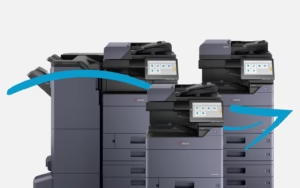
Leasing copiers is a strategic, cost-conscious choice for businesses that require reliable office equipment without the financial burden of a massive upfront capital expenditure. For organizations operating in fast-paced markets across South Florida—including Broward, Miami-Dade, and Palm Beach counties—juggling tight operational budgets and the necessity for dependable, high-speed machines is a daily reality.
This comprehensive guide breaks down precisely how copier leases work, the myriad operational advantages they offer, and practical methodologies for selecting the optimal plan for your specific workflow. Whether you are establishing a new legal practice in Fort Lauderdale or upgrading a medical facility in Sunrise, leasing can safeguard your cash flow, simplify your IT maintenance, and grant you the flexibility to scale as your enterprise evolves. Below, STAT Business Systems explains lease structures, analyzes the financial dichotomy of leasing versus buying, and provides a framework for evaluating your regional options.
Key Takeaways
- Structured Agreements: Copier leases enable businesses to utilize state-of-the-art machines for a fixed term in exchange for predictable, scheduled payments.
- Comprehensive Bundling: High-quality leasing packages bundle preventive maintenance, emergency technical support, and consumable supplies to reduce your day-to-day administrative workload.
- Financial Agility: Spreading payments out over several years improves cash flow, and lease costs are frequently deductible as standard operating expenses.
- Technological Relevance: Leasing facilitates regular hardware refreshes, preventing your business from being tethered to obsolete, insecure technology.
- Term Flexibility: Short-term rentals provide immediate agility for temporary projects, while long-term leases deliver lower monthly payments and sustained operational stability.
- End-of-Term Options: Most commercial leases include specific buyout provisions that allow you to purchase the multifunction printer (MFP) outright at the conclusion of the contract.
What Are Copier Lease Agreements and How Do They Work?
At its core, how does leasing a printer work? A copier lease agreement is a legally binding contract that permits a business to use office copy machines or multifunction printers for a defined duration in return for regular monthly or quarterly payments. The contract meticulously outlines the terms of usage, the delineation of maintenance responsibilities, and the financial parameters of the agreement.
Key Terms and Conditions in Copier Lease Contracts
Before authorizing a lease, administrators must scrutinize the contractual details that dictate both cost and operational liability. Common terms include:
- Lease Term: The duration of the agreement. Commercial leases typically span 36, 48, or 60 months.
- Monthly Payments: Your recurring financial obligation, formulated based on the hardware model, the length of the term, and the integration of any managed services.
- Maintenance Responsibilities: The clauses determining who bears the cost and responsibility for repairs, replacement parts, and routine servicing during the lease lifecycle.
- Information Needed for Approval: To initiate a lease for commercial printers, leasing companies typically require your business’s legal name, tax identification number, time in business, and a basic credit history check to establish terms.
What Services Are Included in Copier Leasing Packages?
Premium leasing packages—often referred to as Managed Print Services—bundle vital support mechanisms that drastically reduce your internal IT burden. Typical inclusions feature:
- Maintenance Services: Scheduled, proactive servicing to ensure the machine maintains optimal performance levels.
- Technical Support: Remote diagnostics and on-site assistance for troubleshooting, network integration, and mechanical repairs.
- Supplies and Consumables: Many agreements cover automated delivery for items like toner, neutralizing unpredictable supply-chain expenses.
Financial Strategy: Is It Smarter to Lease or Buy a Copier?
Which is financially more beneficial to a business: leasing or buying copiers? While copier sales and outright purchases make sense for highly capitalized corporations with long-term asset retention strategies, leasing is generally the smarter maneuver for growing or mid-sized firms. The primary benefits center around capital preservation and technological agility.
Cash Flow and Tax Advantages
Leasing preserves working capital by transforming a substantial capital expenditure (CapEx) into a predictable operational expense (OpEx). This liquidity allows your business to direct funds toward revenue-generating activities like marketing or staff expansion.
Furthermore, can equipment lease payments such as printers be deducted on taxes? Yes. In many jurisdictions, operating lease payments can be fully deducted as ordinary business expenses in the year they are incurred.
Should you capitalize a leased copier? This depends on the structure of the lease. Under current accounting standards (such as ASC 842), capital leases (often called finance leases)—where you essentially own the equipment at the end—must be capitalized and recorded as an asset and a liability on your balance sheet. Conversely, standard operating leases function differently. Always consult a certified public accountant or tax advisor to navigate how specific agreements impact your corporate tax strategy.
Cost Savings and Technological Flexibility
Leasing delivers pragmatic advantages that maintain corporate agility:
- Mitigated Initial Costs: Standard leases require minimal or zero down payments.
- Up-to-Date Technology: As digital threats evolve, outdated hardware becomes a liability. Leases facilitate frictionless transitions to modern systems equipped with advanced data encryption.
- Contractual Elasticity: Agreements can frequently be scaled or modified as your monthly print volume fluctuates.
Choosing the Right Terms and Specialized Equipment
Finding the optimal office printer lease requires aligning the contract terms with your specific industry requirements, volumetric output, and organizational trajectory.
Short-Term vs. Long-Term Terms
Understanding the dichotomy between short- and long-term commitments is crucial for cost optimization.
- Short-Term Leases & Rentals: Ranging from a few months to a single year, copy machine rentals are ideal for temporary construction sites, specialized events, or short-term auditing projects.
- Long-Term Leases: Standard 3-to-5-year contracts offer significantly lower monthly premiums and guarantee steady equipment access for established offices.
Leasing Specialized Equipment
How much does it cost to lease a large format printer? For architecture, engineering, and construction (AEC) firms, standard office copiers are insufficient. Leasing a wide-format plotter (such as a KIP system) generally commands a higher monthly premium than a standard A3 multifunction printer due to the specialized imaging technology and media handling involved. However, the cost is easily offset by the ability to produce in-house, full-scale architectural blueprints.
(Note: While businesses frequently ask, “Can 3D printers be leased?” or “How much are flatbed printers to lease?”, these represent highly specialized industrial niches. Traditional office technology providers like STAT Business Systems specialize in standard corporate MFPs and AEC wide-format plotters.)
How to Choose the Best Copier Leasing Companies Near Me?
When evaluating a “copier lease near me,” businesses must look beyond the initial monthly quote. Partnering with a reputable local dealer is far more advantageous than signing with a distant, faceless conglomerate.
Factors Determining a Leasing Company’s Reliability
To select the best regional provider, critically evaluate the following attributes:
- Industry Experience: Established providers boast refined operational processes, robust supply chains, and deep manufacturer relationships. STAT Business Systems, for instance, leverages 40 years of local expertise.
- Service Area and Response Times: Ensure the provider physically operates within your region. If your business is in Fort Lauderdale, partnering with a dealer headquartered in Sunrise ensures rapid, localized deployment of technicians and parts, dramatically reducing downtime.
- Customer Reviews: Consistent, positive feedback regarding maintenance speed and billing transparency is a strong indicator of a trustworthy partner.
End-of-Term Options and Lease Buyouts
Understanding the conclusion of your contract empowers you to strategically plan for hardware replacement, acquisition, or removal.
Can I Purchase the Copier After Leasing Ends?
Yes. The vast majority of commercial copier leases include specific end-of-term options. A Fair Market Value (FMV)lease typically allows you to purchase the machine for its assessed value at the end of the term, while a $1 Buyout Lease guarantees you can assume ownership for a nominal one-dollar fee once all payments are finalized.
Is There a Way to Sell Your Copier Lease?
If your business downsizes or closes, breaking a lease can incur steep penalties. While you generally cannot “sell” the machine (because the leasing company retains ownership), some financiers allow you to transfer or sublease the equipment to another qualified business, provided the new entity passes a rigorous credit evaluation. Alternatively, upgrading your equipment with your current dealer often allows them to roll the remaining balance into a modernized lease structure.
How Does Maintenance and Service Support Work?
The intrinsic value of an office printer lease is heavily dependent on the accompanying Service Level Agreement (SLA). Exceptional service terms safeguard your productivity.
- Regular Inspections & Diagnostics: Modern systems feature remote diagnostic capabilities, allowing local providers to monitor toner levels and mechanical health in real time.
- Repairs and Emergency Support: Comprehensive leases absorb the cost of parts, labor, and dispatching technicians for unforeseen mechanical failures.
- Response Velocity: Prioritize local dealers who guarantee rapid response times. Swift interventions minimize operational bottlenecks, ensuring your administrative staff remains efficient.
Frequently Asked Questions
What should I consider when negotiating a copier lease agreement?
Focus intensely on the term length, the monthly expenditure, and the exact scope of the SLA. Clarify who bears responsibility for preventive maintenance, what the overage charges are for exceeding page limits (especially color prints), and the stipulations surrounding early-termination fees.
Are there any hidden costs associated with copier leasing?
Vigilance is required to avoid hidden expenses. Scrutinize the contract for per-page overage fees, mandatory insurance surcharges, document processing fees, and charges for out-of-scope IT network repairs. Partnering with a transparent local dealer mitigates these surprises.
How can I determine the right copier for my business needs?
Begin by auditing your historical monthly print volume and enumerating essential functions (e.g., dual-scanning, 11×17 ledger printing, staple finishing). Compare Kyocera and KIP models for processing speed and reliability, and rely on your local dealer to conduct a professional workflow analysis.
What happens if my copier breaks down during the lease?
If your lease includes a maintenance agreement, you simply contact your provider’s local dispatch. A technician will either resolve the issue remotely or arrive on-site to execute the repair, with the costs covered under your service contract.
Can I upgrade my copier during the lease term?
Yes. Reputable technology partners understand that business needs scale rapidly. Most will allow you to upgrade to a faster or higher-capacity machine midway through your term by restructuring the lease, ensuring your hardware consistently matches your operational tempo.
How do I end a copier lease agreement?
Ending a lease requires strict adherence to the contract’s notification clauses. You must typically issue a formal Letter of Intent (LOI) to the leasing company within a specified window (often 30 to 90 days before the term expires), detailing whether you intend to renew, execute a buyout, or return the equipment to their designated facility.
Conclusion
Leasing office copiers empowers organizations to optimize their cash flow, streamline hardware maintenance, and consistently leverage the latest, most secure technology without enduring crippling upfront costs. By thoroughly understanding lease structures, accurately calculating the total cost of ownership, and prioritizing localized, high-quality service, you can architect a technology strategy that perfectly aligns with your corporate objectives. Take the next step toward an effortless, modernized office environment by partnering with trusted local experts who understand the unique demands of your regional business landscape.